Monday, September 14, 2015

Your Team:The company you keep.

By Tim Dolbear
www.timdolbear.com

Over the last 30 years, since joining my first 'Pro' rock band, on through some touring, studio work and then on to owning Eclectica Studios and working full time as a producer for the last 16 years, I have learn a lot of things about people, musicians, egos, pride, and artist. I have learned a few thing about who we pick to work with, or your 'team'. I wanted to share a few things that I hope will help you out as you work in this strange industry full of musicians, producers, wannabees and professionals.


Who you choose to work with. 
You have to remember that you do not have to work with the person you are currently working with, unless there is a gun to your head, you are free to move on. If its not working, cut and run. Or in a blink of the eye, 20 years will have gone by and the ship you hoped to be on will have sailed.

There is no time for drama, druggies, alcoholics, nut jobs, prima donna... And you need people who understand your vision and are at or above your level of talent. Above your level is really what you need to be striving for. Team members that are 'above' your level help you strive. Teaming up with people below you will usually drag you down to their level.

I understand that change is hard sometimes, but moving to a situation that fits you better is always worth it. And it can be quite inspiring too.

Choosing a studio engineer.
Find someone who gets you and your music and will put the time into achieving what you are paying them to do. If they are not the most knowledgeable person about what you are hiring them to do, don't hire them. Why would you? Their lack of knowledge will cost you money and time and cause all sorts of stresses.

Find someone with proper experience and not just credits. Gold records and a Grammy do not equal experience. I know, as a trainer for Sequoia now for 5+ years, I am still amazed at the lack of experience and knowledge some of the people I've trained have, yet they have Gold and Platinum albums hanging on the wall.

Once you have the right engineer, someone with knowledge and experience that fits your needs, let him do what he does best. A friend of mine is a doctor and told me all about patients coming into his office and telling him their diagnosis and what he needs to do, that they had read it on the internet... How absurd! If they thought he needed to be told what to do, why are they there? But it happens in the studio too. You need to trust the fact that the engineer you picked has the experience and know-how to do what you hired him or her to do.


Picking studio musicians and players.
I always say, let the professional do what they do best, and with session musicians and players you always get the best results by doing this.

For example, I give a drummer the basic grooves that I need him to lay down, then I let them do that voodoo that he do so well. This is what they do, and their enhancements to my basic ideas will be way better then what I could have envision, you know?

I have played guitar on hundreds of releases, you probably know my background. I was tracking an acoustic guitar solo on a song and the client instructed me to the point were it sounded like a horrible solo done with a keyboard. They even at one point said "I don't think it should be played like that, a guitar player wouldn't do that."
Other clients have brought me simple solos to redo that they had played but wanted done better, but then would not let me do anything other than note for note exact reproduction of what they did. Imagine what the song and solo could have been like if they had allowed me to do my thing.


I'll leave you with this. 

Remember if you have chosen a person to be part of your team, you need to trust what they do, otherwise you really do not have a team and you will be unhappy and frustrated, along with frustrating everyone around you through out the project.  


Friday, September 11, 2015

My Flow: The journey of sound at Eclectica Studios

By Tim Dolbear
www.timdolbear.com

I was asked to go a little in depth about the signal flow here at Eclectica Studios.(www.eclecticarecordings.com)
It's really straight forward once you use it, but it may seem a little overwhelming at first... so lets dive in...

I currently have 12 mic lines on my wall jackplate in live room feeding into the control room and directly into the corresponding preamp for the feed. No patchbay, if you want to use the Manley mic pre, you plug into feed #9 on the live room panel.


My current preamps:

-Manley 40db, 1 channel

-Great River MP-2NV, 2 channels with the GR EQ-2NV inserted

-Altec 8 channel mod'd preamp from 1979 called the MASH unit (Microphone amplification system housing)


Each Preamp feeds its own compressor and the compressors feed an Apogee AD-16 analog to digital converter (not the rosetta, the original sounded better IMO). The AD-16 feeds optically the ADAT ins on the RME 9652 and 9632 interfaces that work as a single interface. I work at 96k sample rate so there are 4 channels per optical line.


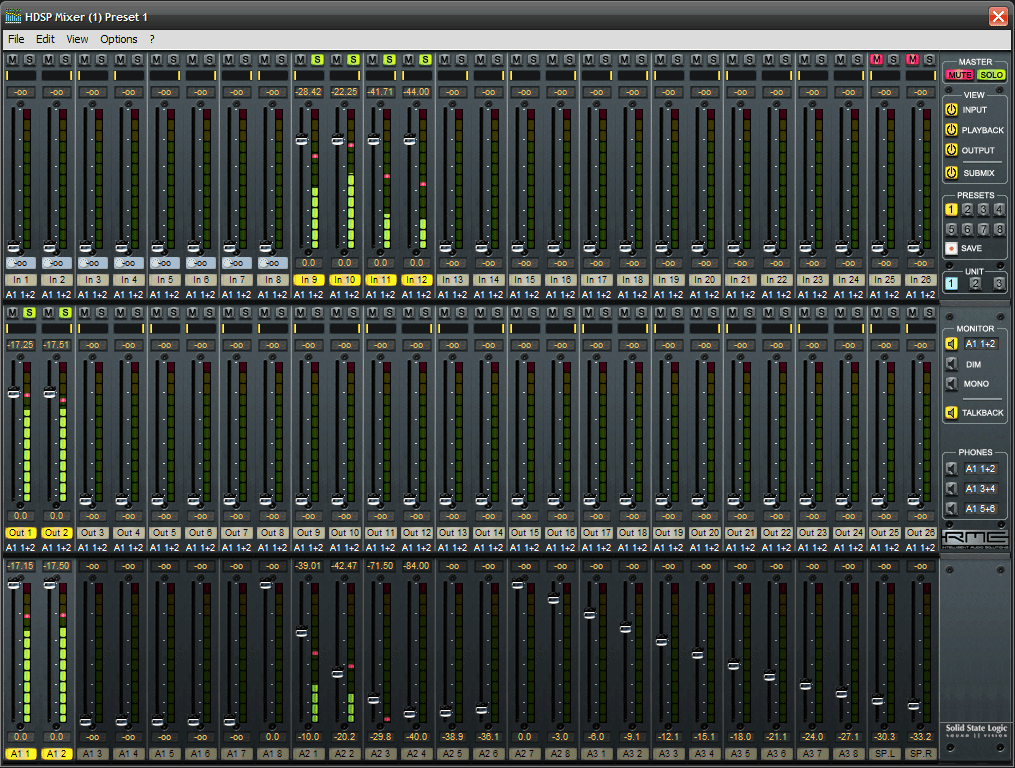
I use RME's Totalmix nowadays instead of a real console. It handles all my routing, TB, cue and CR monitoring... It allows me to save mixer setups and recall session setups on the fly. It stays open on my 2nd monitor.

Liveroom headphone amp is fed from the RME 9632's analog out (the Cue mix). The Control Room (CR) is feed from the 9652 optical out to the Mytek Stereo 192DSD.


My Mixbuss: While tracking and editing in Sequoia, the master out normally feeds outputs 1-2 of the 9652 to the Mytek Stereo 192DSD. For mixing I switch Totalmix to a different setup (Preset) and feed Sequoia's master out to outputs 5-6 which send out to a Mytek Stereo 96. This D/A converter feeds the Great River EQ-2NV which then feeds the Apogee AD16 inputs 12-13 and are recorded onto a track in the project, printed as the Mix. Inputs 12-13 also then feed back out to the Mytek Stereo 192DSD for monitoring in the CR of the mix buss loop.

The GR EQ-2NV has 2 ins and outs pre channel. When used with the MP-2NV preamp, the preamp has a insert designed for the EQ-2NV that places the EQ in the proper signal path prior to the output transformer creatin a perfect "Channel strip" circuit. There is also a set of XLR in/outs on the EQ and a switch on the front that allows you to change between the mic pre insert and the XLR connection, very cool!! So for tracking, its set for the micpre insert, for mixing and mastering it is set to the XLR ins and outs.


Here is the breakdown:

Manley 40db, feeds switch that allows it to go to Ashley SC55 (1981) into the AD16 ch 9

GR MP-2NV, ch 1 feeds Ashley SC-55(1981) into AD16 ch 10,
GR MP-2NV, ch 2 feeds switch, allowing it to feed SC55 into AD16 ch11

Altec preamp "MASH Unit"
ch 1 feeds a Ashly CL-50(mid 1980s)
ch 2 feeds a Ashly SC-50(mid 1980s)
ch 3 straight in
ch 4 straight in
ch 5 + 6 Room mics or overheads, feeds Ashly CL-52 (mid 1990s)
ch 7,8 straight in
...these feeding AD16 1-8

Simple, straight through workflow. Want to track a vocal through the GR preamp? Plug the vocal mic into the input in the live room and arm the track for the input in Sequoia. Done. Adjust the Preamp and compressor.

Now go make some music!


Tuesday, September 8, 2015

Wednesday, August 26, 2015

How to naturally add textures to your drum recordings.

By Tim Dolbear
www.timdolbear.com

So there are 2 mics I use to add a trashy-ness to a otherwise beautifully recorded drum track. Now I know there are lots of plug-ins and toys where you add distortion and compression to the sound to trash them up a bit so they sound more "rock 'n roll" but why fake it? I prefer to address it naturally by using a trashy sounding mic and adding it in under the drum tracks during mix.

Here's what I do; When I track drums for a rock song or any song I think may need this, I set up one of my 2 favorite mics for this trickery as a secondary overhead and record it to its own track. Once done I have it along with the normal mics all tracked out on separate tracks: Kick, Snare, Overheads, Tom, Floor tom, and trashy mic. Then during mix after I have the drums sounding good and balanced I bring up the trashy mic's fader until it flavors the sound just how I want.

The 2 mics I use are:

The America D4T mic from the late 1930's; complete trashy sound.


The Turner U9SA from the 1940's with its Paper diaphragm; sounds like an old Glenn Miller recording.  Yes, I still have the original tags and box.


So, how does it sound?

In these examples, I am using the Turner Mic set up directly above the snare about 4 ft up. Its plugged into a Manley Mic pre and a Ashly SC55 compressor with a 7:1 ration and about 4-6db of reduction.


The Example 1 first plays just the solo'd Turner Mic track, then just the normal drum tracks and at 14sec the turner track is unmuted and you hear them blending. The Turner is just tucked in under the normal tracks to add some MIDs and trashiness to the mix. Example 2 simply goes back and forth with the Turner on and off. These are the unEQ'd and unmixed drums. Just the raw tracks from the tracking session.

Example 1 wave file 22secs 44.1 16bit

Example 2 wave file 38secs 44.1 16bit

Example 3 Turner mic solo'd


Its subtle in the mixed in examples, but effective in a mix.

One last note, watch for phase issues, flip the phase on your trashy mic back and forth till you fine a blend you like, also move it around if needed so when it's mixed in with the other mics it relates to them well.  


Now, go make some music!


Tuesday, August 4, 2015

Cables and the re-appearance of Tone. The Colossal Cables Review

This is part 2 of Cables, connectors, patch-bays, pedals, and the disappearance of tone: Go to Part One

By Tim Dolbear
www.timdolbear.com


My good friend Paul Martinez told me about a cable company here in Austin called Colossal Cables that is selling world wide and gaining some real attention in the musician and studio world and the Audiophile world. He wanted me to meet the owner of the company Brian Mendes and check out what he was doing. So in late July we all went out for a meal and Brian brought me a few samples to check out.

He gave me his new prototype 20ft XLR Mic cable, a guitar cable called Sweet Fats, and a short speaker cable. All built very well with the finest ingredients and rapped in a cut resistant fabric. I tested these out against what I normally use which is mostly Monster and Mogami cables. I tested both in my live rig and studio here at Eclectica Studios.

I started my testing by plugging in my Republic 50 watt tube head into my 1974 Marshall with well broken in Greenback 25watt reissue speakers, using this massive but short speaker cable from Colossal Cables. Then I unrolled the two similar length guitar cables: My Monster instrument cable and the Colossal Sweet Fats cable. Each cable I then rapped around the handle of the Amp and the other end around my guitar strap so I could quickly swap between these instrument cables.

The monster cable I had always used and even showed off in Part 1 of this article about cables sounded in comparison to the Colossal cable like a old cassette recordings and worst yet, the touch and feel of playing through it now felt like I had a dying tube in the input section of the Amp. What in the world? Just swapping between the two cables, Monster and Colossal Sweet Fats was disheartening to say the least. The Colossal cable had taken the sound and feel to a new level.

When you go from a Pro-Co or Belden guitar cables to a Monster cable there is a big difference, less mid sounding and more highs, but going to a Colossal Sweet Fats from the Monster cable was more then just a better EQ curve. Yes, the highs now sounded like a Low-Pass (High Cut) filter had been removed from my sound and the Mids had changed completely becoming solid, present, clear... But beyond the EQ change, the touch of playing the guitar changed. Hard to describe unless you are a player, but imagine the different between driving a car with 4 really low filled almost flat tires verses driving with them properly inflated.

Download Test Files HERE  (44.1k 16bit files, SRC by Saracon) 35Meg Download

Next I tested the Speaker cable. Now remember that speaker cables are not shielded as instrument or mic/line cables are, as those types carry and a very small amount of voltage, sometimes less than a watch battery's voltage... a speaker cable carries AC electricity and instead of micro-watts, they carry 10, 50, 100 or even 1000 watts.

Though the Colossal speaker cable is built like a tank which is a plus for working musicians, it did not sound much different really to my standard 16 guage 4ft cable I normally use. Note: The speaker cabinet does play a part in this as guitar speakers only produce usable frequencies up to about 5k. Looking at a Spectral display of the frequency response of the recording, there is nothing coming out above 15k and from 5K to 14k, the level dropped from -30db to -90db steeply. So using this speaker cable on a full range speaker system or PA will give a different result.

I thought the 2 different speaker cables sounded different in the room while testing but this is why I record everything and listen back unbiased by visuals and excitement. On playback I am not hearing much difference. With lots of distortion set on the amp (High Gain), there may be a slight bit of upper harmonics coming though better, but setting the amp to a clean/bluesy sound, I don't hear a difference. I included this example too in the Test Files.


Test System:
Amp Mic: Audix D1
Room Mic: sE5 matched set (Room mics not provided in test files)
Preamp: Great River MP-2NV + EQ-2NV(Bypassed)
Compressor: Ashly SC55 (compression off)
AD: Apogee AD16
DA: Mytek Stereo192DSD
DAW: Sequoia running at 96K
Monitoring: Neumann 120/Sub

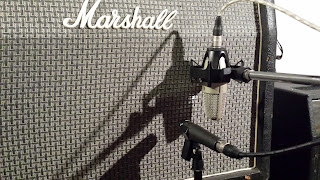
1974 Marshal Slant cabinet, D1 mix(Colossal XLR not Picture)
I then tested the Mic Cable, again great build quality, and the sound was again, revealing and Amazing! Using the Colossal XLR (still in beta at this time but you can special order them) added not only a nicer, truer frequency response but the resolution came alive. It reminded me of the first time I used my Manley Preamp, which was my first REAL quality preamp, and could not believe the resolution and depth that it pulled from the microphone. This cable did the same thing. In the example you can hear more of the "room sound" in the signal the mic captured. Amazing! Instead of the mic sounding like it's flat against the cabinet, suddenly there is depth and life.


Here is the kicker... the 20ft XLR Mic cable, is plugged into my wall box that is wired into my preamps in the control room, about 20FT from the panel. The cables I used are all good quality (Mogami)but still, they are in the chain of cables in the listening test, as the signal flows: Mix>Colossal XLR>Panel>Mogami runs>Preamp. So just replacing the 20ft run that is in the live room, between the Mic and the Panel yielded this amazing improvement.


Lastly I tested the guitar cables again, this time my Gibson J100Extra with a LR Baggs LB6 pickup. The guitar, like all my acoustics, has no preamp inside the guitar, instead I use a Steward Active DI box. This means that a 1 million ohm signal, or very tiny almost non-existing voltage is leaving the guitar and traveling to the DI box where it is amplified up to Mic level. A good test for cables. In comparison to the monster cable, the Colossal Sweet Fats cable sounds more extended, again as if again a low-pass filter or high-cut filter had been removed. The smooth extend highs are really the most noticeable part to the improvement. I got similar results from testing my Fender Bass direct line into the Great River Preamp.


So, in conclusion, Its not a small difference, but a very big improvements using Colossal cables. These are a big step up in sound quality and in capturing the true sound, but they are not cheap... most in the $100+ per cable...and I purchased a lot of cables last night and I have more still I want to get such as to replace my room mic runs. In addition to the XLR Mic and the guitar cables, I also bought new lines cables to replace the runs from my Mytek Stereo 192DSD D/A converter to my powered monitors. Even though the runs are a higher voltage (+4 professional line level) I am hoping there is the same type of improvement. I will write about how that goes in a followup soon!

Now, Go make some music!

Download Test Files HERE  (44.1k 16bit files, SRC by Saracon) 35Meg Download

UPDATE:

Today I received my cables for the monitor section allowing me to hook up the Mytek Stereo 192DSD directly through to my Neumann Monitoring. The difference is noticeable across the entire frequency spectrum, sound is more present, and the depth and resolution are all better now. This means that the new cable do make a difference even when running a +4 professional line level through them.

Now the consideration of swapping out more cable runs and I am already saving my dollars to do just that. This is an great way to upgrade your studio at its very foundation. I seriously recommend buying a Guitar or Mic ColossalFat cable and trying it out. As the example show, its not a subtle improvement, its a BIG improvement.

:-)


Wednesday, July 22, 2015

"Spice is the spice of life"

By Tim Dolbear
www.timdolbear.com

I always say "Spice is the spice of life" and that variety helps flavor our experiences, especially in audio production.

I receive many recordings into Eclectica Studios for mixing that have good intentions sprinkled all over them, but usually these good intentions do not work out as the original recording engineer had intended or hoped for.

An example would be an acoustic guitar that was tracked once, panned Left, then the audio was copied to a second track and panned Right. This second track is then delayed or moved slightly later in time to make a "Stereo sounding" part...  ...Or another would be when 10 tracks of electric guitars are recorded to make the "Wall of sound" and are done by just tracking the same thing over and over again...

In the first example this is simply the same guitar part with one side coming out of the speaker a few millisecond later than the other speaker. This does not cause the illusion of 2 guitar players playing, but simply creates panning to one side when listened to through headphones. When listening with speakers, if you are anywhere but exactly in the center of the two speakers, it sounds mono and tunnel like.

The second example is even worst, if you track the same guitar player playing the same guitar and parts 10 times, you actually get a smaller sound then just two properly done takes. This is because the sound starts cancelling itself out after the first few tracks are layered.

That bring us to the topic of variations.  

Tracking.
It's always good to layer parts that warrant it, but you do not want to simply record a part the same way twice. Lets take the electric guitar example. I find the best way to track 2 guitar parts and get them to sound big and gorgeous together is to first dial in the guitar and amp to the sound you want, mic it and track it. Then play the part again as close as possible to the way you performed it the first time and simply hard pan these take, Left/Right.

For this second track though, you want to vary the elements as much as possible; Different guitar, different amp, or maybe different speaker cabinet, different microphone, even a different preamp for the mic, any change will help.

When you swap out an element in the recording chain, even just one of the above listed elements, it changes the spectrum and tones, even the timbre of the part and therefore sits together with the first part beautifully.

The frequency spectrum of the two parts now compliment each other rather than cancel out each other due to similarities in frequencies. The more variation, the bigger the combine sound is. 

When tracking acoustic guitars, I always use 2 different guitars, but often use the same ADK A51TC mic into my MANLEY preamp. Since the guitar is the main element, for me its enough to swap that out. I also usually use my solid maple Guild Dreadnought for the first take and then my Gibson J100 Extra jumbo body or even my Oscar Schmidt wood bodied Dobro for the second take. I also will capo one of the guitars at the 4th, 5th or 7th fret to make sure I play different chordal registries on the one of the takes.

When a vocalist wants to double up a part, depending on the style, I will sometimes change the mic that we are using. I may have them stand back from the mic or move closer, just to vary the tone by way of the proximity affect of the mic. Sometime turning their head to face off angle with the mic to get more 'room' sound into the take. Again, any and all variations will help because the same voice tracking the same part twice, when they come together in a mix you get a thinning out of the sound from some phase cancelling, and it's usually the lower tones. You end up with a thinner sound, while all along you were trying to make it thicker.


Mixing.

These same kind of principles are for mixing too. Last night I mixed a track that had 2 electric guitar rhythm parts, panned Left and Right, but they had the EXACT same sound from using the same patch on a Line6 POD.

To counter this I sent one through a UAD NEVE 1081 EQ and the other into a UAD API Channel. First I solo'd and then centered the Left guitar to hear it independently. I open the 1081 EQ and emphasis the Hi-mids and lows around 100hz. Then moved it back to Left and unsolo'd it. Next I solo'd and panned center the Right guitar and with the API Channel I High Passed at 100Hz, and dialed in more Mids around 1KHz. I then panned it Right again and unsolo'd. Now when played back together, the two guitar tracks sound fuller and compliment each other.

A key here is to use not only two different EQ settings but also 2 different EQs. These two modeled after their hardware counterparts that have their own personality and ways of affecting the sound.

Channel strips do not equal a console.

I have seen many people using the same Channel strip across their entire mix, example would be the UAD API channel strip on every channel in in a mix in order to get "That API sound". It looks good on your screen and gives you that "I am working on a console" vibe, but even though each track can be affected in a manor that is like an API console, a very big ingredient is missing; Variations in the sound from channel to channel that the hardware console exhibits.

For instance...24 channels of a real API Vision console will have 24 channels that sound basically the same, but not exactly the same due to component within the channel stip. These little variation make the overall tone and sound blend together and fill in. I have a friend who works on a SSL 4000 console and he knows which channels sound best for certain things; "Channel 6 sounds best for snare, 17 and 21 for electric guitar..." This is because as the components age and change, the sound changes too.

This is one place where Plugins are not yet emulating the hardware: Unit to unit Variations.


It goes beyond a big mixing console. I just added a Great River EQ-2NV to my master buss for mixing. Its fed by a Mytek D/A and capture with an Apogee A/D. Beyond the wonderful sounding EQ curve I get from the EQ-2NV, the sound stage or stereo image and depth are all enhanced and affected greatly. The 2 channels are discrete and therefore slightly different I am guessing, but I am sure both channels are dialed in slightly different from each other too, do to the setting of the EQ knobs on each channel by hand with no automatic recall. Just dialing them in to the best of my ability.  

Regardless of what contributes to it, the variations between the Left and Right create something wonderful! It makes me wonder if any of my plugins, while running in stereo, are not simply the same mono channel that was modeled being doubled to make the two channels for a stereo instance?

My UAD MANLEY Massive Passive plugin sounds great as an EQ but does not affect the depth and stereo stage even 20% of what the Hardware Great River does, could this be why? I may research how UA models stereo units if I get a chance.

Regardless, there is a wonderful sound pallet that comes from the imperfections of analog gear.


So there you have it. Switch it up, use different elements in your productions, and then send me your tracks to Mix and master :-)


Friday, July 17, 2015

Yesterday and today...and the future of music.

By Tim Dolbear
www.timdolbear.com


Someone the other day asked me what is the future of music and music technology? I thought for a few minutes and answered:

"I believe it will continue to be more and more automatic (autotune, auto song arrangements, auto mixing, auto mastering) until its gets to the point where its not creative or enjoyable anymore for anyone at any level. And it will go back to basics, but music will only be a shell of what it once was. With no return on investment, nothing of quality will be available and Music will simply fall away as its appeal and stimulus will not keep up with humans' shortening attention spans".


To elaborate more...
Programs like MAGIX Music Maker have one click buttons for making a song; asking what style? upbeat or slow...? and then with one click the music and loops are all added to the project and the song is done. Add to that auto lyric writing, coming soon auto singer, and the song is done. There is software to mix the song to the style you want. Then you have LandR, the auto-matic mastering service that has reported to already master 1.5 million song at $9 each. All of these services and software suck at making music to put it bluntly, but they will get better and better...


"Do you want a guitar for Christmas or an Xbox?"
There are real musicians out there, but as the younger generations come up, they have less and less of a want or drive to learn instruments and music theory. I remember teaching guitar lessons years ago and having student quit because it was harder than Guitar Hero to play a real guitar. They had been perverted in their views by playing the easy and automatic video game. People would even record themselves playing Guitar Hero and put it on YouTube, as if what they did was real music, as a real musician or artist. 

Labels were flooded with demos all sounding the same and using the same beats and music when Garageband first came out. 


Right now...
If people are willing to pay $5 for a coffee but not even 99cents for a song for an artist they like, then there is no way real musicians will continue putting out music, not because of the monetary cost, but because or the lack of return on investments and the discouragement that it brings.

We are surrounded by a flood of really bad music, YouTube is filled with a million bands and singers that are nothing special. But I say they have always been there.


The Real 1989

Back in the 80's when I was in the clubs in Los Angeles, there was a million bands out there all struggling to "Make it". But we only knew of the ones around us we could see and hear in person. We did not realize every town had hundreds if not thousands of bands all trying to "make it". So we had drive, we saw the dream as reachable feed by news of bands getting "signed' and a music world filled with Rock Stars.

Now that the days of Rock Stars are gone and the industry has completely changed, I do believe that just as many bands "make it" to the next level as always have, but its so hard to see them as nowadays EVERYONE is out there and available to been seen. In 1989, if you got to make a record, or got onto MTV, so people on the other coast could see you, you had arrived! And you did have a chance to make a career out of music. But now everyone is on YouTube, everyone records and the same pool that has always been there is now see-able as flooded. We see this flood and think "no one is making it nowadays, I know of all these people on face book and none of them are making it anywhere". Well we just did not have Facebook, let alone the internet in 1989 to see all of the others drowning in the pool. So we held on to our dreams and aspirations.

That's enough food for thought on this day in an interesting time.